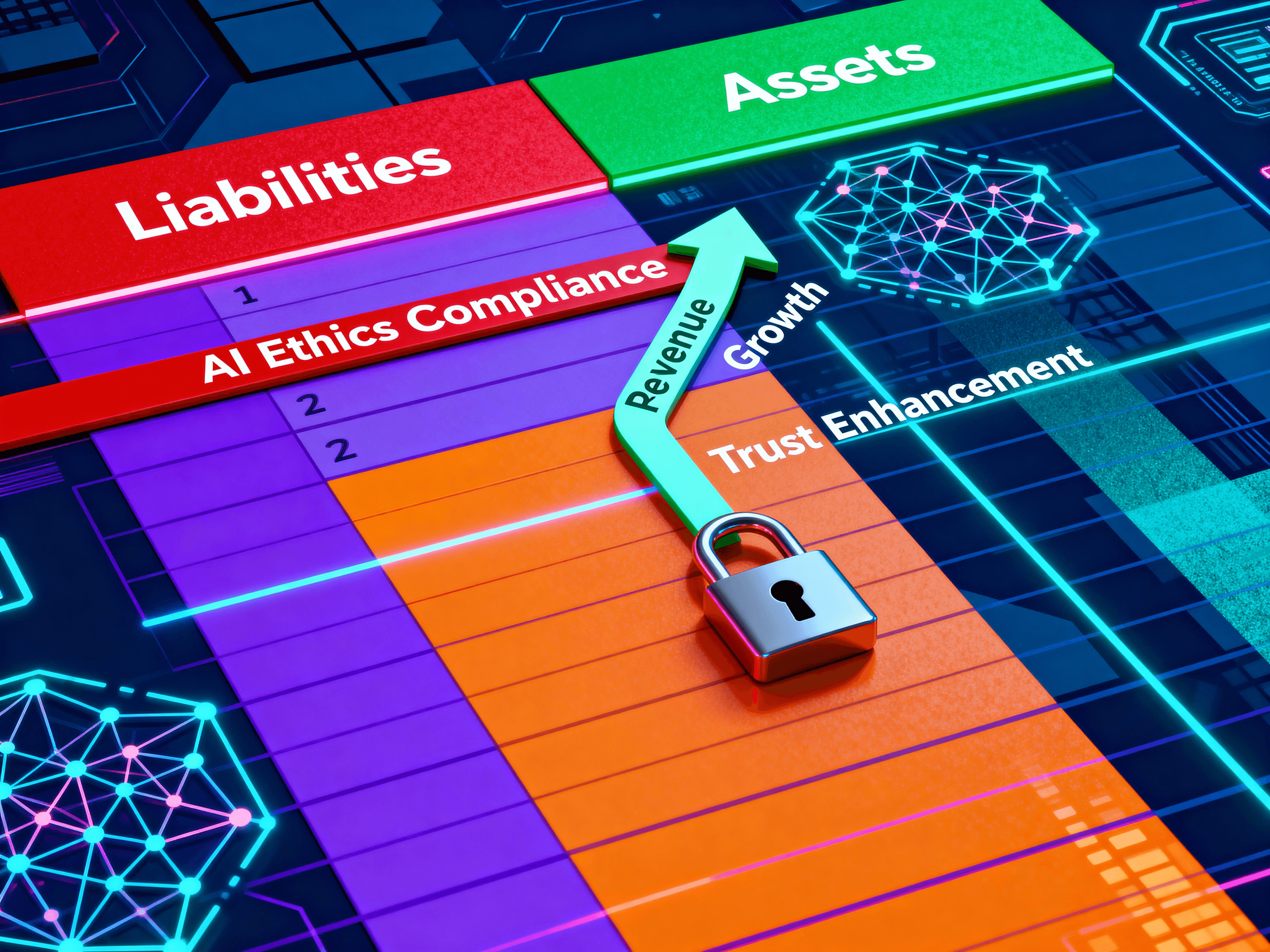
AI ethics is not a checkbox. It is your growth strategy in 2026. Companies investing in transparent, explainable AI systems close enterprise deals faster and build customer trust more effectively. A founder recently lost a 200,000 euro contract due to lacking audit trail capabilities - illustrating how ethical AI systems directly impact revenue.
The 2025 Shift
Regulatory requirements in finance and healthcare now extend sales cycles by 30-60 days. Audit trails have transformed from best practices into contractual requirements. Retrofitting costs three to five times more than building ethics in from the start.
The EU AI Act is now in effect, following a risk-based approach. The higher the potential impact of a system on people’s rights or safety, the more obligations apply. Some uses are banned outright. Others fall into a high-risk category, such as AI used in hiring, credit scoring, or safety-critical systems. Even lower-risk systems require transparency - users must understand when AI is involved and what it does.
Three-Part Strategy
1. Build transparency from inception. Every AI decision in your system should be trackable. Not because a regulator might ask, but because your customers will. An explainable system is a sellable system.
2. Integrate human oversight as a core feature. Design workflows where humans review, approve, and can override AI decisions. This isn’t a limitation - it’s a feature that enterprise buyers actively seek.
3. Adopt the strictest regulatory standards as your foundation. Build to the EU AI Act’s requirements even if you’re not in Europe. When you meet the highest bar, every other market becomes easier to enter.
Team Stability Matters
Institutional knowledge is critical. Developer turnover risks compliance integrity and exposes organizations to liability. The teams that maintain consistent engineering talent - people who understand the system’s history, its edge cases, and its compliance requirements - are the ones that can pivot without breaking their ethical commitments.
The Bottom Line
Organizations viewing ethics as a checkbox face future penalties. Those embedding it into product architecture gain competitive advantages through enterprise trust and premium pricing justification. The question is not whether you can afford to invest in ethical AI. It’s whether you can afford not to.