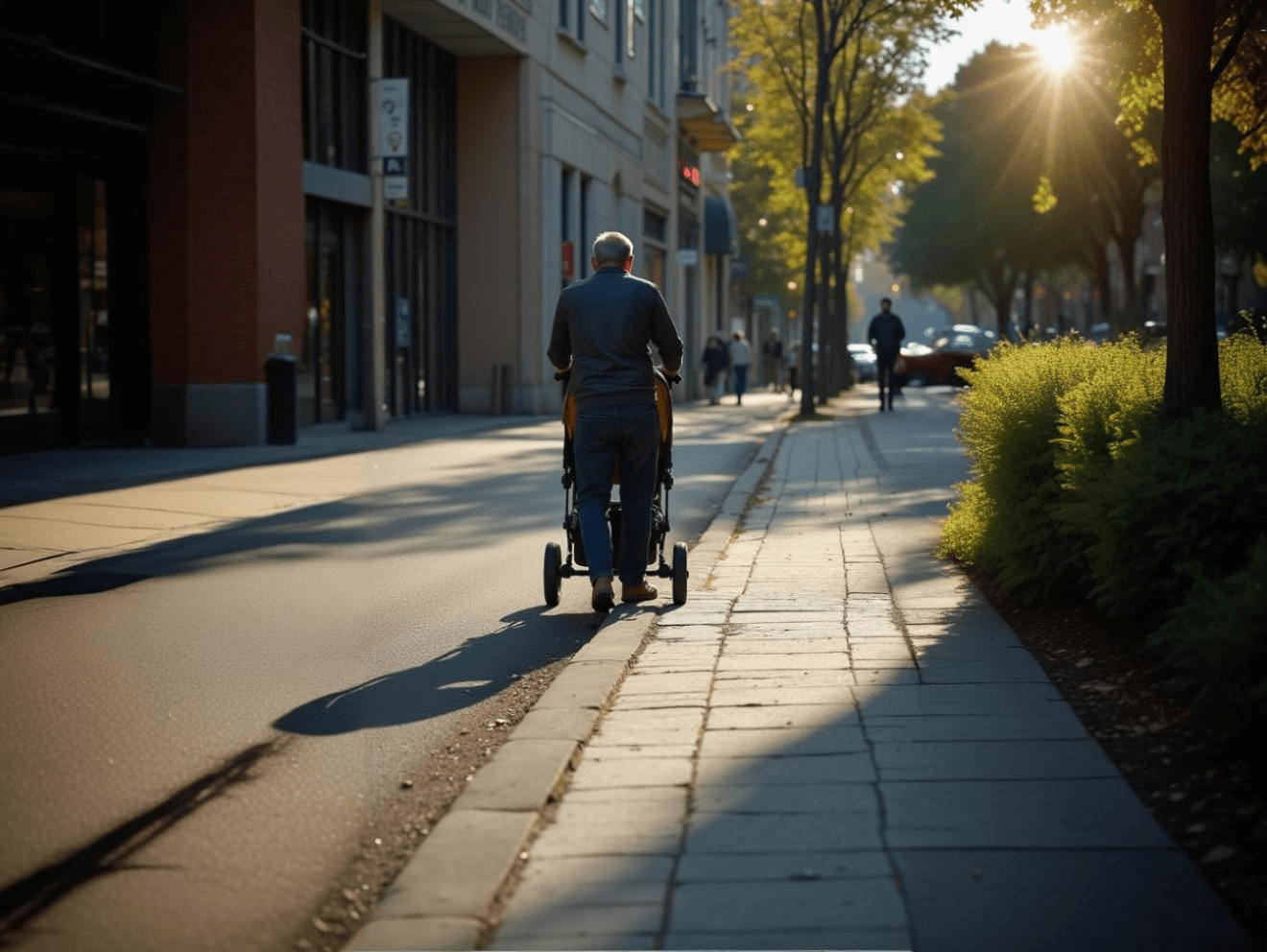
It’s easy to frame disability issues as matters of social justice or charity - helping a minority in need. But there is another powerful frame: disability drives innovation that benefits everyone. A phenomenon known as the “curb-cut effect” shows how solutions originally designed for marginalised people often end up making life better for the general public. The term comes from the sloped ramps carved into pavements at crosswalks. These curb cuts were first created to allow wheelchair users to roll onto and off sidewalks. Once installed, however, they proved a boon to parents pushing prams, travellers wheeling luggage, cyclists, delivery workers with carts - virtually everyone appreciated the convenience of not stepping off a high kerb. What began as an accessibility fix became an urban design standard around the world.
Many everyday technologies have similar origin stories. The first modern typewriter was invented in the early 19th century by an Italian count who wanted to help his blind friend write letters on her own. Out of that assistive device grew the keyboards that now sit on every laptop and smartphone. Audiobooks started in the 1930s as recordings of books on vinyl records for blind readers. Decades later, audiobooks are a multi-billion dollar industry enjoyed by commuters, multitaskers, and book-lovers of all kinds. The electric toothbrush was originally marketed in the 1950s to help people with limited arm mobility. It turned out that electric brushes clean so effectively that dentists now recommend them for everyone. Even smartphone voice assistants owe a debt to disability innovation - voice recognition was a game-changer for users who were blind or had mobility impairments. Now, technologies like Siri or Alexa have gone fully mainstream.
These examples underscore a clear point: designing for accessibility sparks creativity. When we build tools or environments for people who move, see, hear or process information differently, we often discover solutions that benefit all users.
This “curb-cut effect” is as relevant on the streets of Yaounde or Bamenda as it is in Berlin or Munich. In Cameroon, few curb cuts exist yet - but imagine if they were widespread. Not only would wheelchair users gain freedom, but so would an elderly person with a cane, a pregnant woman with limited mobility, or a market trader pushing a heavy cart. Accessibility is infectious in a good way: once introduced, everyone wants to use it.
Germany has been a leader in some aspects of accessible tech and design. The country has standards requiring websites and digital services to be accessible. This not only helps disabled users navigate the internet, but also improves overall user experience - clear layouts, captioned videos, and keyboard navigation options benefit people with slow connections or those who prefer reading text over audio. In Cameroon, where digital infrastructure is still developing, adopting such inclusive design principles could help more people get online.
Breaking Barriers: Toward a More Inclusive Future
Both Cameroon and Germany face the challenge of breaking remaining barriers - physical, social, and attitudinal - to achieve true inclusion. For Cameroon, the priorities are basic but vital. First, awareness and attitude change are paramount. Schools could include lessons about famous people with disabilities and emphasise empathy and respect. Second, Cameroon needs to enforce and fund its disability laws - building ramps, installing accessible toilets in public buildings, training teachers in inclusive education, and providing assistive devices. Third, empowering organisations of persons with disabilities (OPDs) in Cameroon is key - “nothing about us without us” is a mantra of the disability rights movement.
For Germany, the journey is further along, but not over. One major goal is to achieve full inclusion in education and community life. In the workplace, Germany can share its quota model and continue improving it. As technology evolves, Germany is focusing on digital accessibility - making sure new digital services are usable by everyone.
The broader lesson for both countries is that inclusion is an ongoing process. A disability should neither be a life sentence of marginalisation nor a constant headline of bravery - it should be an unremarkable fact about someone that doesn’t stop them from living their life or being respected.
The Journey Ahead
From the bustling cities of Germany to the towns of Cameroon, the journey toward full disability inclusion continues. Both countries affirm a simple truth - disabled people are an integral part of humanity. The curb-cut effect reminds us that an investment in accessibility is an investment in everybody’s freedom. A ramp in a Cameroonian village helps a grandmother and her grandchild just as much as a wheelchair user. Accessible websites in Germany help a tired parent juggling a baby, just as they help a blind user with a screen reader.
The call is the same in Yaounde as in Berlin: leave no one behind. By transforming prejudice with inclusion and innovation, both Cameroon and Germany can move closer to a future where ability, not disability, defines us.