A person living with a disability in Cameroon faces a very different reality than one in Germany. In Cameroon, some people still whisper that disability is a “curse” from evil spirits. By contrast, Germany’s constitution explicitly forbids discrimination on the basis of disability. These two worlds seem far apart, yet they share a common hope: to see disabled people live with dignity and equal opportunity.
Worlds Apart, Shared Hopes
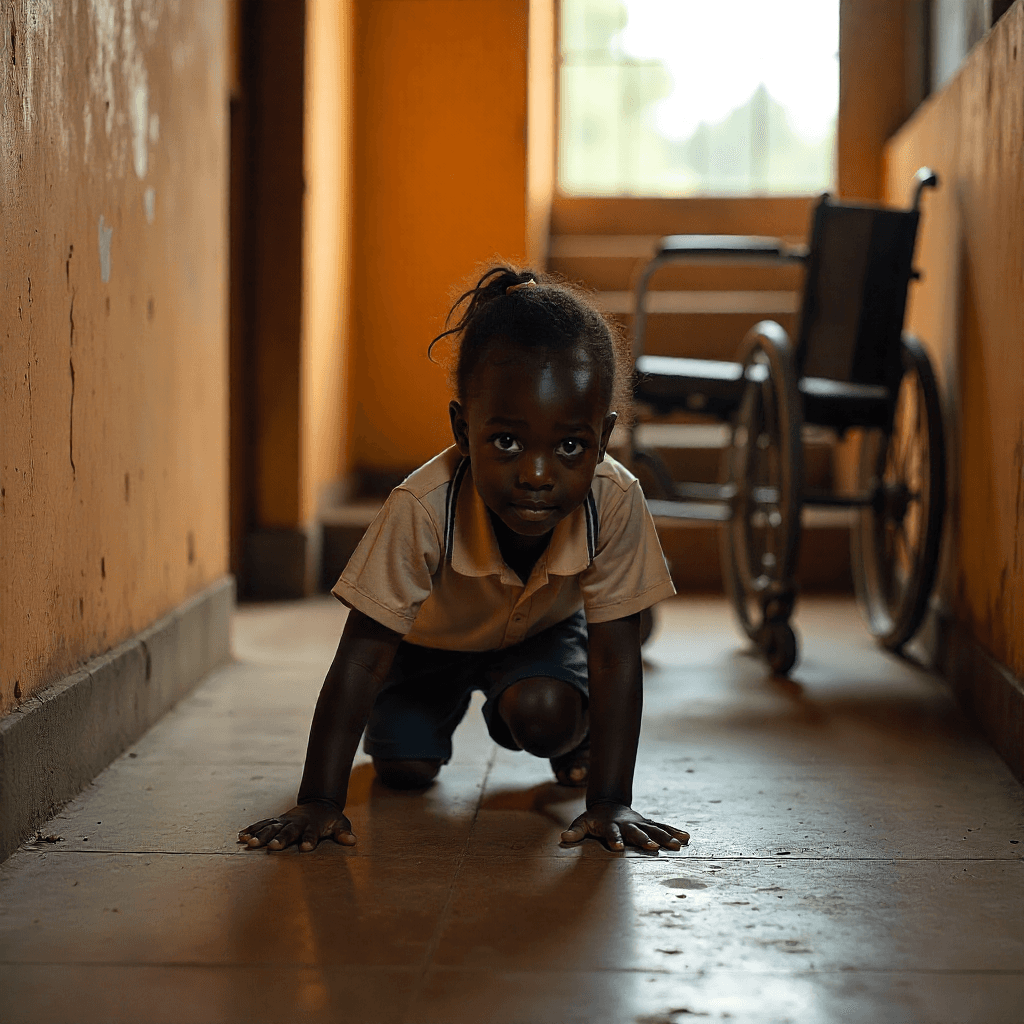
Consider the story of a young girl in Bamenda, Cameroon: every day, she crawls out of her wheelchair and across the floor to reach her classroom because the school has no ramps. Now imagine a different scene in Berlin, Germany: a wheelchair user rolls into a bus with ease - all Berlin city buses are equipped with ramps. At the subway station, elevators and tactile paving guide riders with mobility or visual impairments. These snapshots illustrate more than just two countries’ infrastructure. They tell of two mindsets: one struggling to provide basic access, and another striving to make accessibility the norm.
Stigma vs Support: Perceptions and Policies
In parts of Cameroon, traditional beliefs and lack of awareness fuel stigma around disability. “Many think disability is a curse resulting from evil spirits,” and see disabled persons as “useless.” Such harmful perceptions lead to social exclusion. Families sometimes hide away disabled relatives, fearing shame or believing nothing can be done.
Germany, on the other hand, has a more supportive policy framework, backed by decades of disability rights activism. The German Basic Law proclaims that no one shall be disfavoured because of disability. Germany ratified the United Nations Convention on the Rights of Persons with Disabilities back in 2009. By contrast, Cameroon only completed formal ratification in late 2023.
Infrastructure and Accessibility
The physical environment in Cameroon often amplifies exclusion. Buildings commonly have staircases at every entrance, with no ramps or lifts. Public transport is largely unusable for wheelchair users. Even the government’s own Ministry of Social Affairs building in Yaounde lacks ramps or lifts, so wheelchair users must be carried up flights of stairs.
In Germany, accessibility is far more built into the environment. Most buses and trains are engineered for barrier-free travel. In Berlin, 85% of subway stations can be accessed without climbing stairs. Every city bus has a ramp or kneeling mechanism. Public buildings are required to meet accessibility standards under German law.
Education and Employment Gaps
In Cameroon, many children with disabilities never get a basic education. Schools often lack the accommodations to handle students who are blind, deaf, or have mobility impairments. Without education, job prospects are grim. Many disabled adults in Cameroon resort to informal work or even begging.
Germany’s situation is markedly different, yet not a complete utopia either. By law, all children in Germany have a right to education. However, Germany has historically relied on special schools for disabled children, with about 82% of students with special educational needs taught in separate institutions well into the 2010s. When it comes to jobs, employers with more than 20 employees must ensure at least 5% of their workforce are people with severe disabilities.
The Path Forward
One similarity both countries share is that disabled people often experience lower employment rates and earnings than their non-disabled peers. The difference is in degree and response. Germany recognises this gap and has multiple initiatives to narrow it. Cameroon is only beginning to acknowledge the gap.
As one Cameroonian advocate put it, “Disability is not a problem. The problem is the attitude.” Ensuring education and jobs for disabled citizens requires Cameroon to adjust that attitude at every level - family, community, and state.