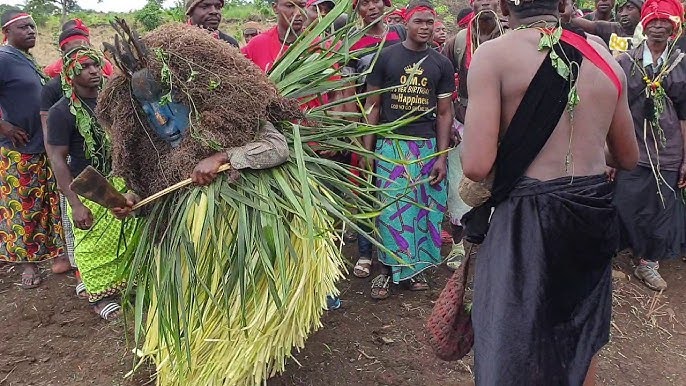
In the shadow of Mount Cameroon, the Bakweri (also known as the Kpwe) people carry on a breathtaking tradition that few outsiders ever witness. The Malle Society (also spelled Maale) is a sacred secret society most renowned for its dramatic “elephant dance” known as Veambe. This society has long been a pillar of Bakweri culture - one of several traditional assemblies that helped unify villages, set communal goals, and solve problems in times past.
What makes the Malle so striking is its mystical connection to the elephant, an animal revered as a powerful spiritual symbol. Members of Malle are believed to share a supernatural bond with elephants, even claiming to have elephant spirit “doubles” roaming the forest. According to lore, a man of the society might spiritually transform into an elephant or control one - but if that elephant is killed by a hunter, the man himself could suddenly die.
Mythic Origins: The Legend of Lisonge Maytey
Every great tradition has a story of how it began. Bakweri elders recount a dramatic origin myth for the Malle Society through the tale of Lisonge Maytey. Maytey was said to be a wealthy man from the Bomboko area known for his reckless gambling. His luck turned so sour that he gambled away all his wealth - even his three wives. Overcome with shame, Maytey fled deep into the forest, disappearing from his village.
Yet Maytey’s exile was not the end of his story, but the beginning of the Malle’s. Alone in the rainforest, he experienced a profound vision. The spirits of the ancestors revealed to him secret wisdom and bestowed powers that would give birth to a new sacred society. Maytey eventually wandered back to human paths and was rediscovered by his astonished villagers. Far from being the disgraced gambler who left, he returned as a man transformed - armed with supernatural insight and a mission.
The term Maale itself means a “gathering of the villages” in the Mokpwe language, reflecting how it brings people together from different communities.
The Veambe Elephant Dance: Pageantry and Symbolism
On special festival days, the Malle Society reveals itself to the public in a spectacular fashion. The Veambe dance is an annual ritual, rotating among different villages that host members from across the Bakweri clan for feasting, music, and dance.
Costumes and Procession
In the morning, villagers and visitors gather as the Malle members emerge in vibrant procession. The society’s men are dressed in vivid arrays of traditional attire. They wrap themselves in patterned cloth around the head and waist, but much of their body is bare and smeared with red camwood mud, and they are decked with fresh green leaves and vines of the forest. Moving in winding lines, the dancers weave in and out of the village, synchronised to the insistent beat of drums. This snaking formation is said to imitate the movement of an elephant herd trekking through the bush.
The Elephant Masquerade
After the initial procession, the energy builds towards the truly breathtaking spectacle - the entry of the elephants. Each “elephant” dancer is completely concealed in an elaborate costume. From the waist down, they wear a huge skirt made from palm fronds. From the shoulders up, the dancer is entirely hidden under a loose hood of sackcloth heavily thatched with raffia palm fibers. Jutting out from this raffia head are a pair of long wooden tusks, carved from ironwood and gleaming.
To the booming of the drums, the masqueraders begin to dance. They move with a heavy, stamping gait. Tied around their ankles are strings of nut shells, which clack and rattle rhythmically every time a foot hits the ground. Senior society members acting as hunters enter the fray with spears or mock rifles. Suddenly an elephant will wheel around and charge, rushing at the hunters in a feigned attack. The “hunters” scatter amid shrieks and laughter from onlookers.
Through the Veambe Elephant Dance, the community symbolically relives an age-old relationship with nature - honouring the elephant’s strength while acknowledging humanity’s age-old pursuit of the animal.
After the elephant masqueraders pause, a bit of levity is introduced by Moseke, the society’s clown, who appears in a mesh net costume with comically oversized yellow fruits for eyes. Another notable figure is Ekpang’a Teta, who acts as the “policeman” of the occasion with a fierce wooden mask and sacred “medicine.”
By the end of the day, the elephants return for some final triumphant steps, and the Malle members withdraw to a private feast. For the villagers who watched, the Veambe dance is a thrilling and unforgettable experience - heritage made alive.