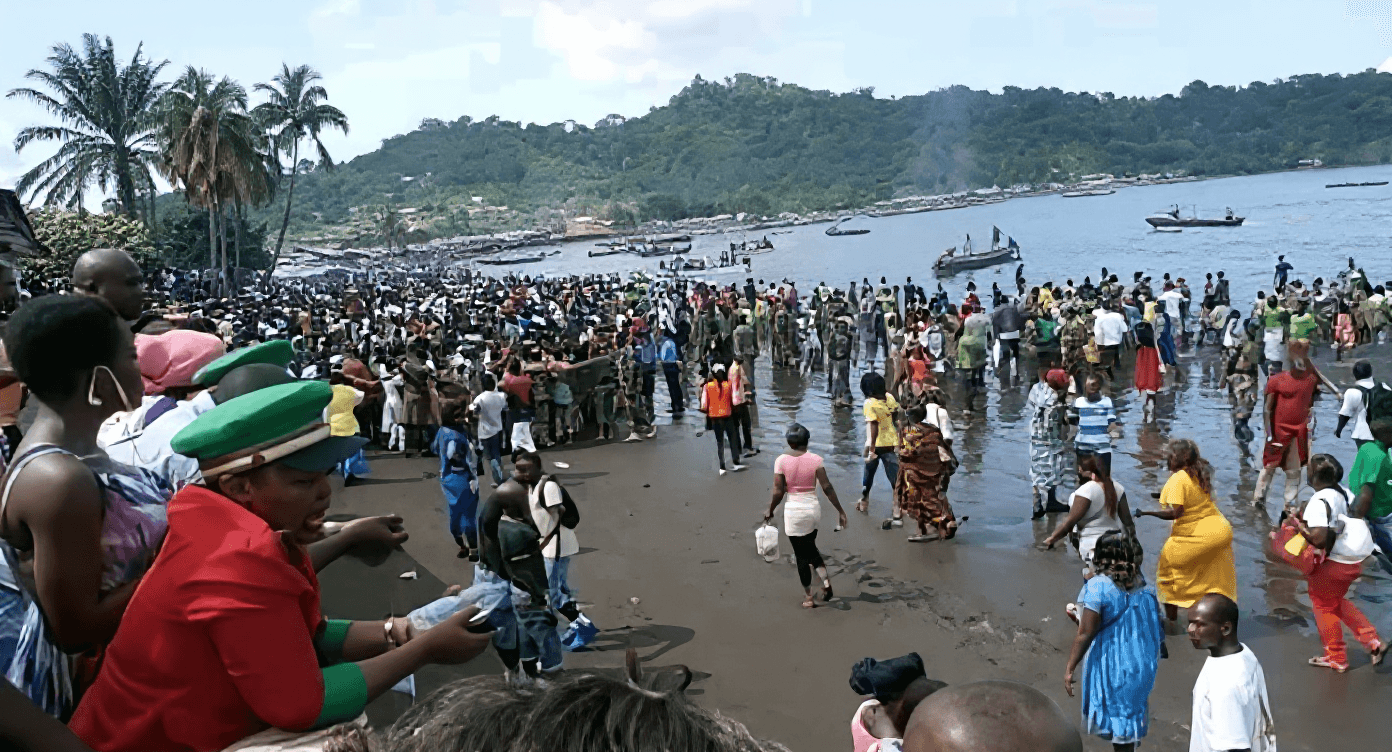
Contested by six villages, the Limbe Canoe Race is an annual sporting event that sees male and female teams from Batoke, Bimbia, Botaland, Mondoli, Ndame, and Wovia compete. Typically happening in March over a week of festivities, the Limbe Canoe Race is a show of force and mastery of the sea’s waves by these coastal villages.
Before Match Day
Preparation lasts for months before match day. It is customary to reuse a canoe from a previous race, unless it has sustained damage or heavy wear. Wood carved from giant mahogany trees - sourced from nearby forests and islands - is cut the year before and allowed to dry thoroughly. Skilled craftsmen then trim, shape, seal and paint the wood with vibrant colours and motifs unique to each village. Even the paddles get makeovers. Meanwhile, the paddlers train hard, building strength and practising in the ocean.
One to two days before the race, the teammates, elders, and sometimes the village chief gather around the boat to invoke favours and blessings from their deities. This ritual is followed by heavy feasting in the participating villages.
While the Canoe Race is about who can finish first, onlookers also quietly judge whose canoe has the most striking colours or the most elegant artwork. Victory comes from a combination of often ignored factors like the collective strength and balance of the teammates, the density and stability of their canoe, and the overall design and hydrodynamics.
Match Day
In the days leading up to the race, the paddlers are forbidden from any contact with women, and some don’t sleep in their homes. They go out to camp. During the eve of the race, the contesting villages are purified - carried out only by the villages’ elders.
On the day of the Race, more rites are done to ensure victory. The villages perform traditional rites believing their ancestors will come and join them during the race. According to folklore, there are certain spots in the sea where the ancestors meet them and enter the canoe.
Teams are composed of upwards of 15 paddlers, with each team clad in matching gear on race day. These long canoes sometimes hold over twenty rowers who paddle in perfect unison. At the blow of a horn, each team launches forward with powerful strokes. The race course typically stretches from the host village’s beach out to a turn-around point around a small island and back to shore.
There is a buzz of excitement when a canoe is finally sighted approaching the shore. The leading paddlers dig their paddles into the water with every ounce of strength for the final stretch. The victorious canoe’s team is greeted by roaring applause from the crowd.
After the Race
After the finish, an award ceremony takes place right on the sand. The champions receive a cash prize and a special recognition, often presented by the Paramount Chief of Limbe. Celebrations carry on long after the race - the winning village bursts into celebration with music, dance, and feasting that can last through the night. Neighbouring villages join in the merriment as well, because the Canoe Race, at its heart, is a friendly rivalry. It unites the coastal communities in shared heritage and joy.