AI is everywhere in 2026. Founders hear stories of small teams using chatbots to automate sales, content, and data science. But once the initial excitement fades, a more practical problem shows up.
It is in every founder’s conversations. After the first ethics and compliance questions are answered, two follow-ups always come up.
Who else is in this space?
What certifications do we actually need?
These are practical questions. They come up when budgets are approved, when sales teams prepare enterprise calls, and when founders try to decide whether they are building something differentiated or just another variation of the same promise.
Why These Questions Keep Coming Up
Most AI products look the same. Founders see all kinds of tools claiming to offer AI agents, yet many are little more than scripted workflows. That skepticism is reasonable.
At the same time, the market feels crowded. When everyone claims to solve the same problem, it becomes hard to see where real differentiation lives. Founders do not want to copy what already exists. They want to understand where the gaps are and whether those gaps are worth pursuing.
Then there is regulation. New rules like the EU AI Act signal the end of dealing with compliance later. Yet most teams are unsure what applies to them. GDPR. ISO standards. AI-specific frameworks. The list feels long, and the order unclear.
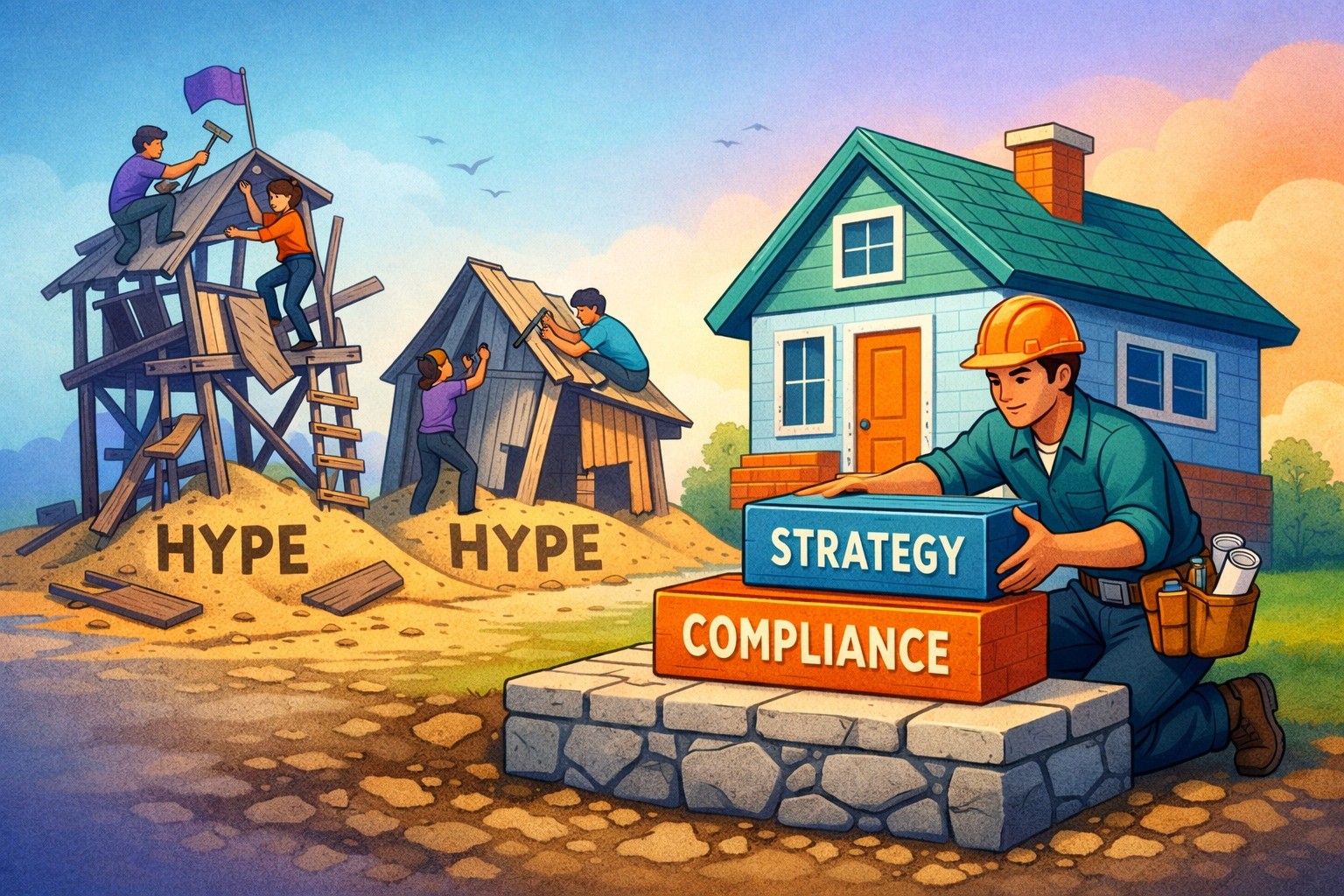
Once founders accept that regulation is inevitable, the real challenge becomes sequencing. Which rules matter now. Which competitors actually threaten your position. And where structure saves time instead of slowing you down.
Why Regulatory Readiness Often Comes First
Understanding the rules early helps clarify the market you’re entering. The EU AI Act is the first broad legal framework designed specifically for artificial intelligence. It follows a risk-based approach. The higher the potential impact of a system on people’s rights or safety, the more obligations apply. Some uses are banned outright. Others fall into a high-risk category, such as AI used in hiring, credit scoring, or safety-critical systems.
Standards help translate legal language into operational structure. ISO 42001, the first AI management system standard, gives teams a way to define policies for data use, monitoring, accountability, and risk management. ISO 27001 and ISO 27701 serve a similar purpose for security and privacy.
You do not need every certificate. You need the ones your customers expect. Early compliance work is not wasted effort. It reduces sales friction later. Enterprise buyers ask these questions early, often before a product demo.
How to See Who You’re Really Competing With
Many founders make the same mistake. They compare feature lists. That approach misses the point.
A meaningful competitive analysis focuses on outcomes, positioning, and trade-offs. Not checkboxes.
Start by defining the problem you solve and the people you solve it for. Next, map the real alternatives. That includes direct competitors, open-source tools, internal scripts, and manual processes. For many teams, the biggest competitor is not another startup. It is doing nothing and living with inefficiency.
Then look at how each option delivers value. Speed. Cost. Reliability. Integration effort. Ongoing maintenance. Switching costs. These are the dimensions buyers actually care about.
List your weaknesses. Be explicit about what you do not do well yet. It is uncomfortable, but it prevents surprises later and sharpens the roadmap.
Competitive analysis is not a one-time exercise. Markets move. Update it regularly, or decisions will drift away from reality.
Turning Insight Into Action
Competitive clarity and regulatory readiness only matter if they shape what you build next.
AI products outlive hype cycles. They face scrutiny from users, buyers, and regulators. The teams that succeed are the ones who understand the rules, know their real competitors, and build with intention.
Agents should solve real problems. Compliance should create trust. Differentiation should be clear.